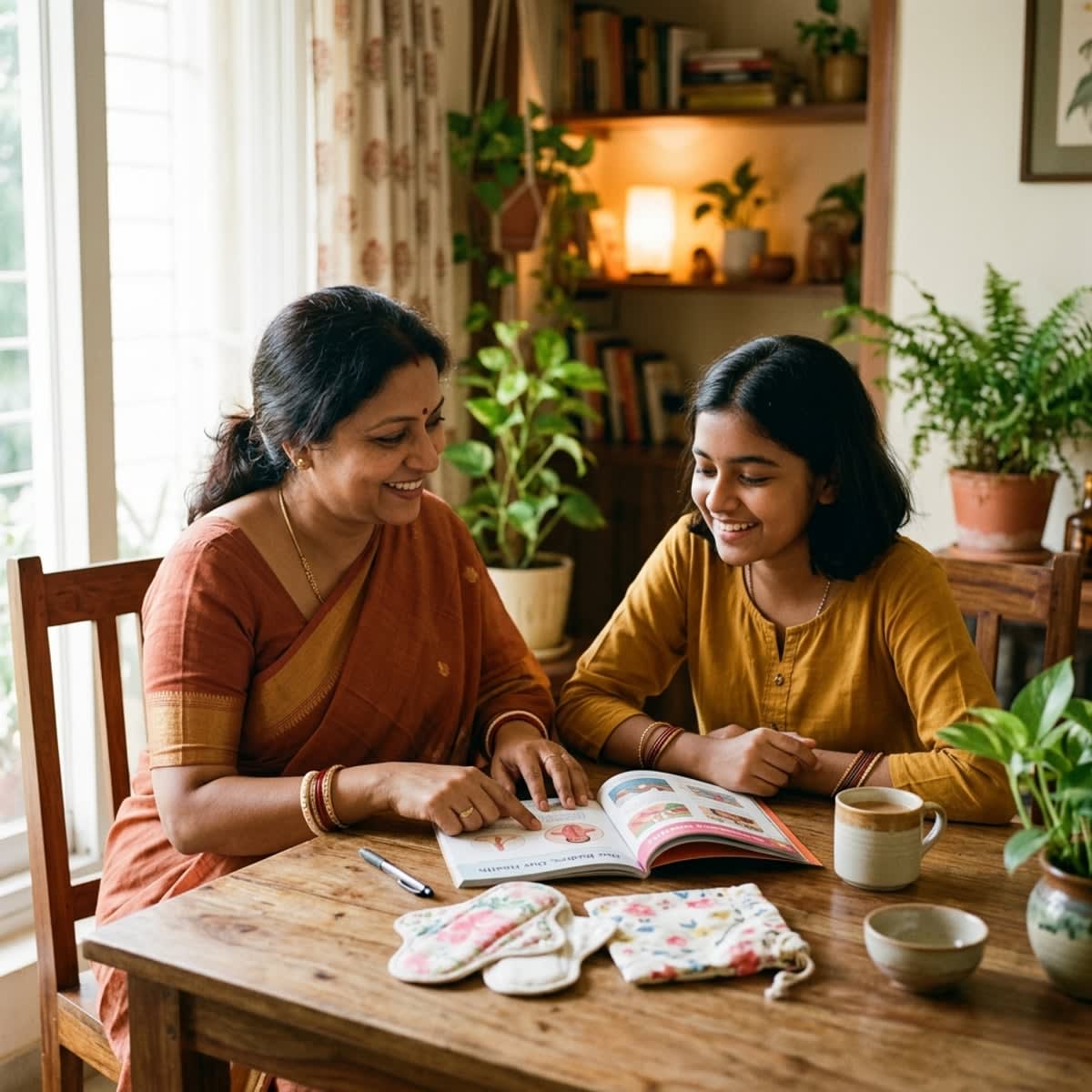
Talking Openly About Periods in South Asian Families: Ending the Culture of Whispers
End the culture of silence around menstruation in South Asian homes. Learn practical strategies for parents to educate daughters and sons about menstrual health, hygiene, and empathy.
“Key Takeaway: In South Asian households, menstruation remains entrenched in a culture of secrecy, linguistic euphemisms, and menstrual shame. From purchasing sanitary products wrapped in opaque black plastic bags to isolating menstruating girls from kitchens and religious spaces, menstrual taboos compromise adolescent health and psychological dignity. Menstruation is an overt indicator of healthy hypothalamic-pituitary-ovarian (HPO) axis function. Reframing menstruation as a normative biological rhythm through open family communication is foundational to reproductive health equity.
Clinical Consequences of Menstrual Taboos
Intra-Familial Menstrual Education Paradigm
1. Proactive Menarcheal Preparation
Adolescent education should precede menarche, demystifying uterine anatomy, hormonal cyclicity, and absorbent product mechanics to prevent anxiety and somatic distress.
2. Paternal and Male Sibling Engagement
De-gendering menstrual hygiene procurement removes social shame. Fathers purchasing menstrual products normalize biological needs within family life.
3. Evidence-Based Hygiene Standards
Absorbent materials must be replaced every 4–6 hours to prevent bacterial overgrowth. Reusable cloths require thorough washing with detergent and complete drying under direct UV solar radiation.
Practical Household Action Plan
| Traditional Restrictive Practice | Evidence-Based Progressive Adaptation |
|---|---|
| Concealing Pads in Secret Drawers | Storing hygiene products openly in shared bathrooms alongside oral care items. |
| Prohibiting Acidic Foods / Citrus | Encouraging vitamin C and bioavailable iron intake to optimize iron absorption during menstrual blood loss. |
| Masking Menstrual Pain (Dysmenorrhea) | Validating pain, applying local heat therapy, and consulting clinicians for secondary dysmenorrhea screening (e.g., endometriosis). |

Dr. Tasnim Ara
OB-GYN & Women's Health Specialist
Dedicated to creating evidence-based, compassionate health resources for women through every stage of life.
Medically reviewed. This story was checked against current clinical guidance by the Femevia medical board. It is educational — always speak with your own clinician about your care.

The conversation0
A kind, moderated space. Share what this story meant to you.
Sign in to join the conversation