Menstruation
Pads vs. Tampons vs. Menstrual Cups: The Definitive Comparative Guide to Period Products
Unsure whether to choose pads, tampons, or menstrual cups? Compare comfort, 5-year costs, safety, and environmental impact to find your ideal fit.
TADr. Tasnim AraOB-GYN & Women's Health SpecialistAug 19, 20268 min readExpert reviewed
0
0
Pads vs. Tampons vs. Menstrual Cups: The Definitive Comparative Guide to Period Products
“Key Takeaway: Modern menstrual hygiene offers diverse technological solutions categorized into external absorbents (sanitary pads), internal absorbents (tampons), and internal non-absorbent receptacles (medical-grade silicone menstrual cups). Clinical selection depends on mucosal biocompatibility, lifestyle requirements (e.g., athletics, aquatic activities), financial sustainability, and risk mitigation regarding Toxic Shock Syndrome (TSS). Menstrual cups demonstrate superior long-term vaginal pH preservation and environmental sustainability compared to single-use disposables.
1. Microbiological Safety & Toxic Shock Syndrome Pathophysiology
Internal vs external product safety hinges on microbial interaction:
- Pathogenesis of Staphylococcal TSS: Toxic Shock Syndrome is an acute, toxin-mediated systemic illness caused by Staphylococcus aureus producing Toxic Shock Syndrome Toxin-1 (TSST-1). High-absorbency synthetic rayon tampons left in situ >8 hours introduce oxygen into the anaerobic vaginal vault, facilitating logarithmic S. aureus proliferation and exotoxin elaboration.
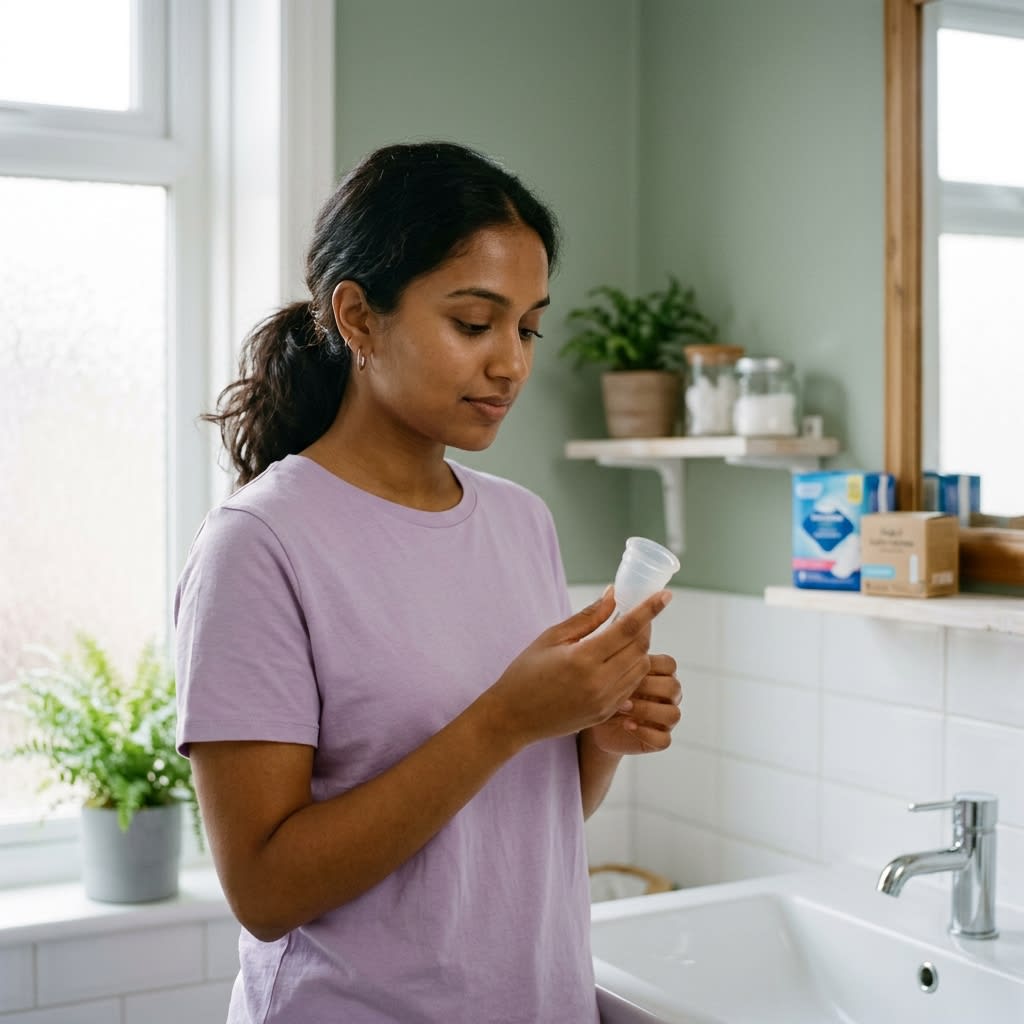
- Menstrual Cup Biocompatibility: Fabricated from inert, USP Class VI medical-grade silicone, menstrual cups collect rather than absorb fluid, avoiding mucosal micro-ulcerations, preserving the endogenous Lactobacillus biofilm, and exhibiting near-zero TSS incidence.
- Cutaneous Dermatitis from Pads: Polyethylene backing and synthetic fragrances in conventional pads trap sweat and transudate, exacerbating vulvar intertrigo and contact dermatitis.
2. Clinical Decision Model for Menstrual Products
Sanitary Pads (External Absorbent)
1Tampons (Internal Absorbent)
2Menstrual Cups (Internal Receptacle)
3Zero TSS Risk; High Cutaneous Maceration
4High Mobility; Strict 4-8h TSS Exchange Window
512h Retention; Preserves Vaginal Mucosa & Flora
6Teens, Postpartum, Nocturnal Heavy Flow
7Aquatic Sports, High-Activity Professions
8Cost-Conscious, Eco-Conscious, Long Shifts
3. Summary Table: Comprehensive Clinical & Economic Comparison
| Parameter | Disposable Sanitary Pads | Disposable Tampons | Medical-Grade Menstrual Cups |
|---|---|---|---|
| Biophysical Mechanism | External capillary absorption | Internal vaginal absorption | Internal elastic fluid collection |
| Max Safe Wear Time | 4 to 6 hours | 4 to 8 hours (Strict max 8h) | Up to 12 consecutive hours |
| Aquatic Activity Suitability | Contraindicated | Highly suitable | Highly suitable |
| 5-Year Financial Cost | ~$150 – $250 USD (Recurring) | ~$180 – $300 USD (Recurring) | ~$15 – $30 USD (One-time) |
| Ecological Footprint | ~1,200 pads landfill burden | ~1,200 tampons & plastic applicators | 1 Reusable cup (~Zero waste) |
| Vaginal Microbiome Impact | Neutral (Vulvar skin risk) | May cause mucosal dryness | Optimal (Preserves natural moisture) |
“🩺 Physician's Note: Patients with intrauterine contraceptive devices (IUDs) can safely use menstrual cups, provided they break the vacuum seal prior to traction to prevent inadvertent IUD expulsion.

About the authorExpert reviewed
Dr. Tasnim Ara
OB-GYN & Women's Health Specialist
Dedicated to creating evidence-based, compassionate health resources for women through every stage of life.
Medically reviewed. This story was checked against current clinical guidance by the Femevia medical board. It is educational — always speak with your own clinician about your care.



The conversation0
A kind, moderated space. Share what this story meant to you.
Sign in to join the conversation