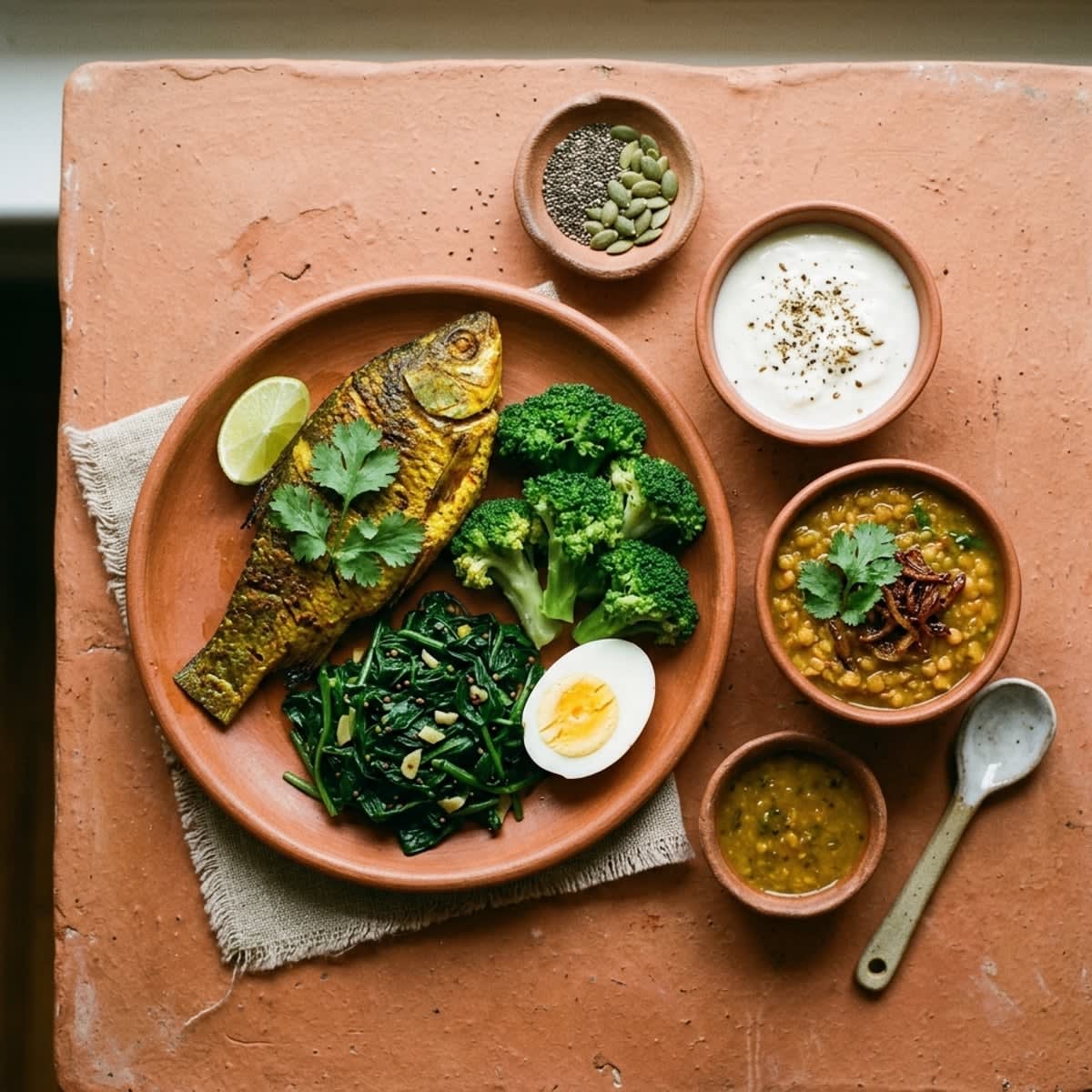
Diet Changes to Support Hormonal Balance: Blood Sugar, Fiber, and Healthy Fats
Discover how stabilizing blood sugar, increasing soluble fiber, and incorporating omega-3 fatty acids naturally optimize estrogen, progesterone, and insulin levels.
Diet Changes to Support Hormonal Balance: Blood Sugar, Fiber, and Healthy Fats
“Key Takeaway: Endocrine homeostasis is fundamentally modulated by dietary macronutrient architecture and postprandial glycemic excursions. Chronic postprandial hyperinsulinemia triggers ovarian theca-cell androgen hypersecretion, driving PCOS phenotypes. Enterohepatic circulation of estrogen requires adequate soluble and insoluble dietary fiber for fecal deconjugation and excretion, preventing secondary estrogen dominance. Incorporation of cruciferous Indole-3-Carbinol (I3C) upregulates phase-I hepatic 2-hydroxylation pathways, while omega-3 polyunsaturated fatty acids suppress pro-inflammatory prostaglandins.
Endocrine-Nutritional Metabolic Feedback Model
B --> E["Blunted Postprandial Glucose & Lower Insulin Demand ➔ Decreased Ovarian Androgenesis"] C --> F["Binds Free Deconjugated Estrogens in Bowel Lumen ➔ Prevents Enterohepatic Recirculation"] D --> G["Suppresses COX-2 & Pro-inflammatory Eicosanoids ➔ Restores Luteal Progesterone Sensitivity"]
E --> H["Normalized Ovulatory Menstrual Cycles & Resolved Hormonal Acne"] F --> H G --> H
Pathophysiological Mechanisms of Nutritional Modulation
1. Insulin-Glucose Axis & Sex Hormone-Binding Globulin (SHBG)
High-glycemic carbohydrate loads (refined white rice, simple sugars) stimulate supranormal pancreatic beta-cell insulin secretion. Hyperinsulinemia directly inhibits hepatic synthesis of Sex Hormone-Binding Globulin (SHBG), resulting in marked elevations of biologically active free testosterone and free estradiol, clinically presenting as hirsutism, cystic acne, and anovulation.
2. Enterohepatic Estrogen Clearance & Microbiome Interaction
Estradiol is metabolized by hepatic cytochrome P450 enzymes into conjugated estriol and estrone glucuronides and excreted via bile. Dietary fiber binds these conjugated estrogens. In the absence of fiber, bacterial beta-glucuronidase in the gut deconjugates estrogen, permitting its retrograde systemic reabsorption and precipitating relative Estrogen Dominance.
3. Hepatic Biotransformation via Cruciferous Indole-3-Carbinol (I3C)
Brassica vegetables (cauliflower, cabbage, broccoli) contain glucobrassicin, which is hydrolyzed to Indole-3-Carbinol and Diindolylmethane (DIM). These phytochemicals shift estrogen metabolism from the genotoxic 4-hydroxyestrone and 16alpha-hydroxyestrone pathways toward the protective 2-hydroxyestrone pathway.
4. Anti-Inflammatory Eicosanoid Synthesis via Omega-3 PUFAs
Eicosapentaenoic acid (EPA) and Docosahexaenoic acid (DHA) displace arachidonic acid from cell membrane phospholipids, attenuating the synthesis of inflammatory Series-2 prostaglandins (PGF2-alpha), significantly reducing dysmenorrhea and systemic luteal-phase inflammation.
Dietary Prescription: Hormonal Nutritional Architecture
| Nutritional Pillar | Primary Biochemical Target | Daily Clinical Target & Food Sources |
|---|---|---|
| Complex Low-GI Carbs | Glycemic stability; blunts peak insulin | 30–40% of total calories: Brown rice, rolled oats, sweet potatoes, legumes |
| Dietary Prebiotic Fiber | Intercepts estrogen reabsorption; lowers beta-glucuronidase | ≥ 30–35 grams/day: Lentils (dal), chia seeds, flaxseeds, guava, leafy greens |
| Cruciferous Bioactives | Stimulates CYP1A1 2-hydroxylation of estrogens | 1 to 2 cups daily: Steamed cauliflower, cabbage, broccoli, kale |
| Omega-3 & Monounsaturated Lipids | Prostaglandin PGE1/PGE3 synthesis; steroidogenesis | Cold-pressed mustard oil, wild hilsa/mackerel, walnuts, pumpkin seeds |
| Bioavailable Lean Protein | Satiety satiety signaling (GLP-1); sustains SHBG | 1.0–1.2 g/kg body weight: Pasture-raised eggs, legumes, poultry, curd |

Dr. Tasnim Ara
OB-GYN & Women's Health Specialist
Dedicated to creating evidence-based, compassionate health resources for women through every stage of life.
Medically reviewed. This story was checked against current clinical guidance by the Femevia medical board. It is educational — always speak with your own clinician about your care.

The conversation1
A kind, moderated space. Share what this story meant to you.
Sign in to join the conversation
Very informative