Postpartum
Caring for a C-Section Incision vs. a Perineal Tear: Clinical Wound Care Protocol
Healing from a C-section or perineal tear? Learn clinical wound care, hygiene protocols with a peri bottle, sitz baths, and how to spot infection early.
TADr. Tasnim AraOB-GYN & Women's Health SpecialistAug 20, 20267 min readExpert reviewed
0
0
Caring for a C-Section Incision vs. a Perineal Tear: Clinical Wound Care Protocol
“Key Takeaway: Postpartum tissue convalescence requires strict anatomical wound differentiation. Cesarean laparotomy incisions represent clean-contaminated surgical wounds prone to superficial incisional surgical site infections (SSIs) if moisture is retained. Perineal lacerations and episiotomies traverse mucosal and dermal planes in a high-bacterial-density anatomical zone, requiring hydrotherapeutic perineal irrigation (peri-bottle antisepsis), warm sitz baths, and strict front-to-back hygiene. Prophylactic stool softening prevents mechanical dehiscence of repair margins.
Biomechanics of Tissue Regeneration
Postpartum Wound Regeneration
1C-Section Laparotomy Incision Multi-layered closure: Peritoneum, fascia, rectus sheath, dermis Goal: Prevent seroma/hematoma & preserve tensile strength
2Perineal Laceration / Episiotomy Perineal body, bulbospongiosus, superficial transverse perineal muscles Goal: Prevent fecal contamination, relieve spasm & promote mucosal re-epithelialization
1. Cesarean Surgical Site Protocol (Incisional Care)
- Aseptic Cleansing: Following dressing removal, cleanse the incision daily with mild hypoallergenic surfactant and running warm water. Pat dry meticulously with sterile gauze; avoid frictional shearing.
- Incisional Splinting: During coughing, laughter, or valsalva maneuvers, apply firm, counter-pressure across the lower abdomen using a firm pillow to offload tensile strain on the fascial closure.
- Ergonomic Load Restrictions: Do not lift any object heavier than the neonate (~4.5 kg / 10 lbs) for the first 6 weeks to prevent incisional hernia formation.
2. Perineal Tear and Episiotomy Care Protocol
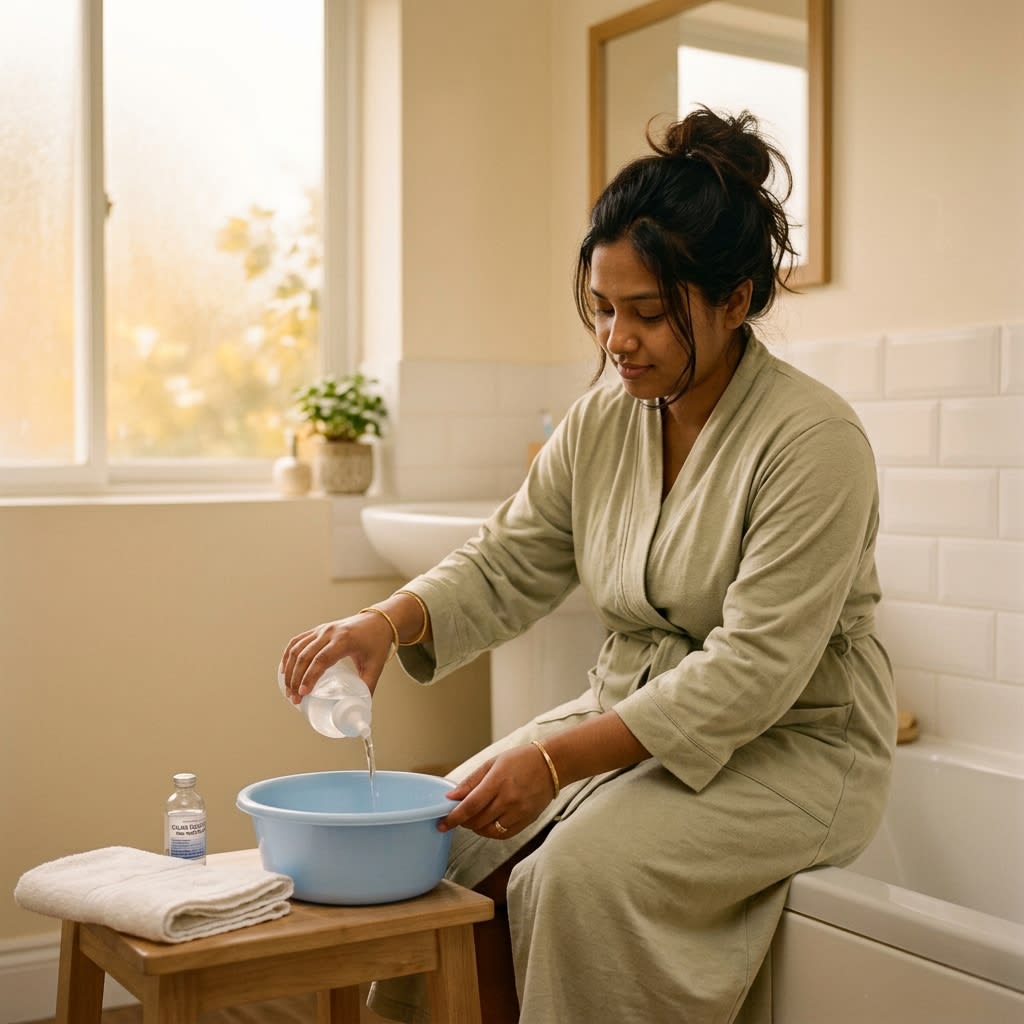
1. Lavage (Lukewarm water via peri-bottle during/after micturition)
12. Front-to-Back Pat Dry (Never wipe toward vaginal introitus)
23. Hydrotherapy Sitz Bath (Warm water 38–40°C for 10–15 min TID)
34. Pressure Relief (Coccyx/donut cushion, ice packs for first 24h)
- Sitz Bath Hydrotherapy: Warm water immersion relaxes pelvic floor hypertonicity, increases local microvascular perfusion, and cleanses debris without mechanical friction.
- Bowel Management: Straining increases intra-abdominal pressure and threatens third- and fourth-degree sphincter repairs. Osmotic laxatives (Polyethylene Glycol or Docusate Sodium) should be maintained until bowel movements are effortless.
Wound Comparison and Clinical Escalation Matrix
| Clinical Parameter | C-Section Laparotomy Incision | Perineal Laceration / Episiotomy |
|---|---|---|
| Wound Classification | Class I/II Surgical Clean Incision | Mucocutaneous Laceration (1st to 4th Degree) |
| Suture Material | Subcuticular absorbable / Monofilament staples | Rapidly absorbable polyglactin / chromic gut |
| Primary Complications | Seroma, wound dehiscence, superficial SSI | Fecal contamination, breakdown, dyspareunia |
| Immediate Red Flags | Purulent drainage, spreading induration, pyrexia | Sudden fecal incontinence, gaping wound margins |

About the authorExpert reviewed
Dr. Tasnim Ara
OB-GYN & Women's Health Specialist
Dedicated to creating evidence-based, compassionate health resources for women through every stage of life.
Medically reviewed. This story was checked against current clinical guidance by the Femevia medical board. It is educational — always speak with your own clinician about your care.



The conversation0
A kind, moderated space. Share what this story meant to you.
Sign in to join the conversation