Menstruation
5 Common Menstrual Hygiene Mistakes to Avoid: Preventing Infections, UTIs, and Odor
Are your period habits harming your reproductive health? Discover the 5 most common menstrual hygiene mistakes—from pad changing delays to harsh soaps.
TADr. Tasnim AraOB-GYN & Women's Health SpecialistAug 19, 20267 min readExpert reviewed
0
0
5 Common Menstrual Hygiene Mistakes to Avoid: Preventing Infections, UTIs, and Odor
“Key Takeaway: Menstrual Hygiene Management (MHM) directly dictates the immunological stability of the lower female reproductive tract. While menstrual blood is fundamentally sterile in utero, its neutral pH (7.4) and protein content provide an ideal microbial culture medium when captured in external absorbents. Common behavioral errors—including infrequent absorbent exchange (>6 hours), retrograde perineal wiping (back-to-front), and intra-vaginal douching—disrupt the protective Lactobacillus-dominant acidic vaginal microbiome (pH 3.8–4.5), precipitating Bacterial Vaginosis (BV), Vulvovaginal Candidiasis, and ascending Uropathogenic E. coli infections.
1. Microbiological Pathophysiology of Menstrual Dysbiosis
Improper perineal hygiene compromises epithelial barriers through specific microbiological cascades:
- Absorbent Microbial Proliferation: Prolonged contact with moisture-saturated cellulose or polymer pads elevates localized cutaneous temperature and relative humidity, driving logarithmic proliferation of Staphylococcus aureus and anaerobic gram-negative bacilli, increasing risks of contact dermatitis and cutaneous micro-ulcerations.
- Disruption of the Acid Mantle via Douching: The healthy vaginal ecosystem relies on hydrogen peroxide- and lactic acid-producing Lactobacillus crispatus and L. jensenii. Introducing alkaline soaps, commercial douches, or antiseptics neutralizes the protective acid mantle (elevating pH >4.5), prompting the overgrowth of Gardnerella vaginalis and Atopobium vaginae.
- Retrograde Uropathogenic Translocation: Wiping from the perianal region toward the urethral meatus mechanically introduces enteric E. coli expressing P-fimbriae directly to the periurethral mucosa, initiating retrograde ascent into the bladder (acute bacterial cystitis).
2. Perineal Infection Transmission Pathway
Prolonged Pad Use (>6h)
1Alkaline Douching / Harsh Soaps
2Retrograde Perianal Wiping
3Cutaneous Maceration & Microbial Overgrowth
4Lactobacillus Depletion (Vaginal pH >4.5)
5Uropathogenic E. coli Urethral Colonization
6Vulvar Dermatitis & Secondary RTI
7Bacterial Vaginosis & Candidiasis
8Acute Ascending UTI / Cystitis
3. Summary Table: Menstrual Hygiene Practices & Clinical Protocols
| Hygiene Practice | Common High-Risk Error | Evidence-Based Clinical Protocol |
|---|---|---|
| Absorbent Exchange Frequency | Retaining single pad for 8–12 hours | Exchange sanitary pads every 4 to 6 hours regardless of flow saturation |
| Vulvoperineal Cleansing | Intra-vaginal douching with fragranced soaps | Superficial external vulvar rinsing with clean, warm water exclusively |
| Perineal Wiping Direction | Back-to-front perineal wiping | Strict anterior-to-posterior (front-to-back) wiping to prevent uropathogen transfer |
| Absorbent Disposal | Flushing down plumbing or open disposal | Wrap tightly in original wrapper/paper; dispose in sealed waste receptacles |
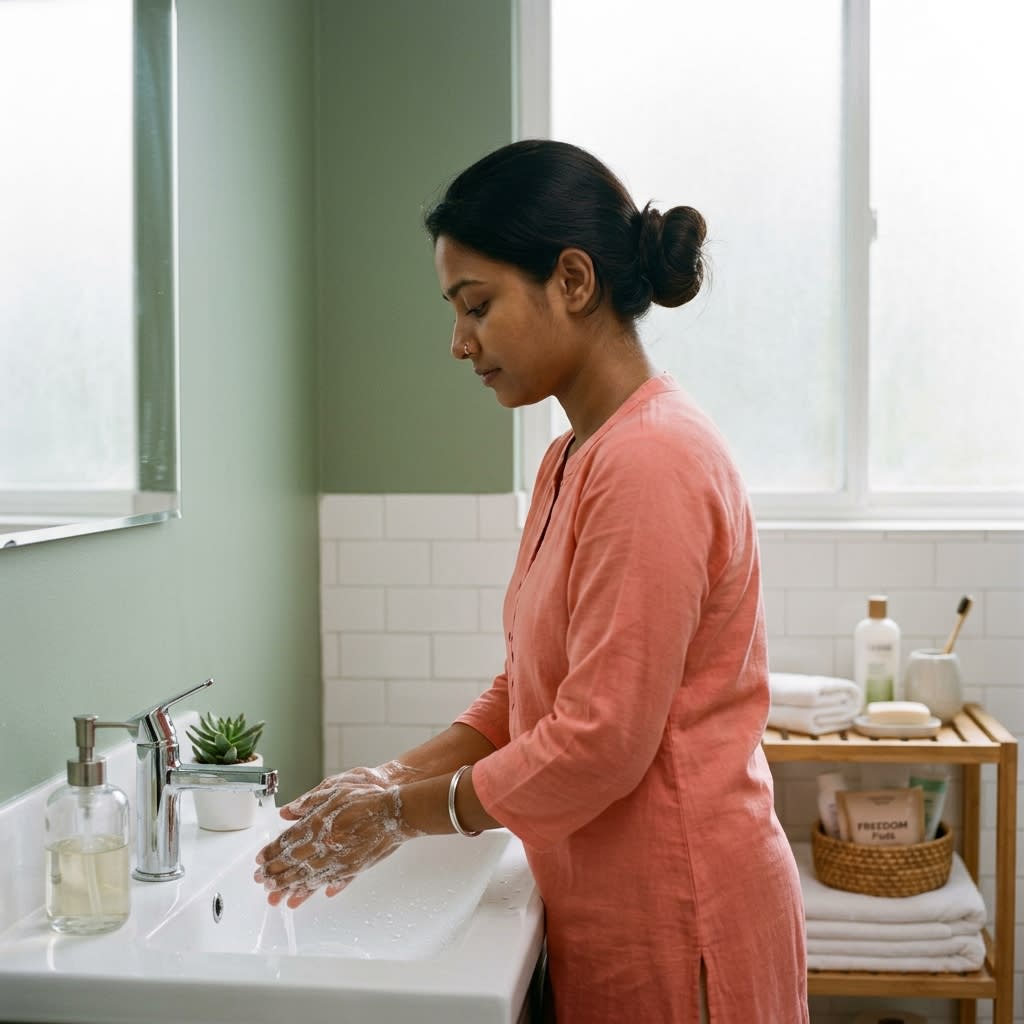
| Hand Hygiene Synchronization | Washing hands only post-exchange | Perform 20-second hand washing with soap both before and after product exchange |
“🩺 Physician's Note: Patients presenting with persistent malodorous vaginal discharge, vulvar erythema, dysuria, or pelvic pain during or immediately following menses require in-office speculum evaluation, vaginal wet mount microscopy, and clean-catch urine culture.

About the authorExpert reviewed
Dr. Tasnim Ara
OB-GYN & Women's Health Specialist
Dedicated to creating evidence-based, compassionate health resources for women through every stage of life.
Medically reviewed. This story was checked against current clinical guidance by the Femevia medical board. It is educational — always speak with your own clinician about your care.


The conversation0
A kind, moderated space. Share what this story meant to you.
Sign in to join the conversation