
Anti-Inflammatory Foods for Women's Health: Evidence-Based South Asian Nutrition
Discover how chronic inflammation impacts women's hormonal health, PCOS, and endometriosis. Learn the most effective South Asian anti-inflammatory foods, cooking techniques, and meal plans.
Chronic systemic inflammation represents a silent pathophysiological driver behind many prevalent gynecological and endocrine disorders, including Polycystic Ovary Syndrome (PCOS), Endometriosis, Premature Ovarian Insufficiency, and Metabolic Syndrome. In South Asian women, chronic high-glycemic diets and high omega-6 to omega-3 ratios frequently perpetuate a low-grade inflammatory cascade that compromises ovarian steroidogenesis and hypothalamic-pituitary-ovarian (HPO) axis signaling.
1. Cellular Pathways: How Inflammation Disrupts Hormones
- NF-κB Activation: Nuclear Factor kappa B upregulates pro-inflammatory cytokines ($TNF\text{-}\alpha$, $IL\text{-}6$, and $IL\text{-}1\beta$), inducing theca cell hyperplasia and hyperandrogenemia.
- Insulin Signaling Interference: Inflammatory serine phosphorylation of insulin receptor substrate-1 (IRS-1) impairs peripheral glucose uptake, stimulating compensatory hyperinsulinemia.
- Prostaglandin Imbalance: Overexpression of Cyclooxygenase-2 (COX-2) drives excessive synthesis of Prostaglandin $F_{2\alpha}$, resulting in intense uterine dysmenorrhea and pelvic adhesions.
2. Evidence-Based Anti-Inflammatory Dietary Matrix
| Dietary Element | Bioactive Mechanism | Clinical Impact | Optimization Strategy |
|---|---|---|---|
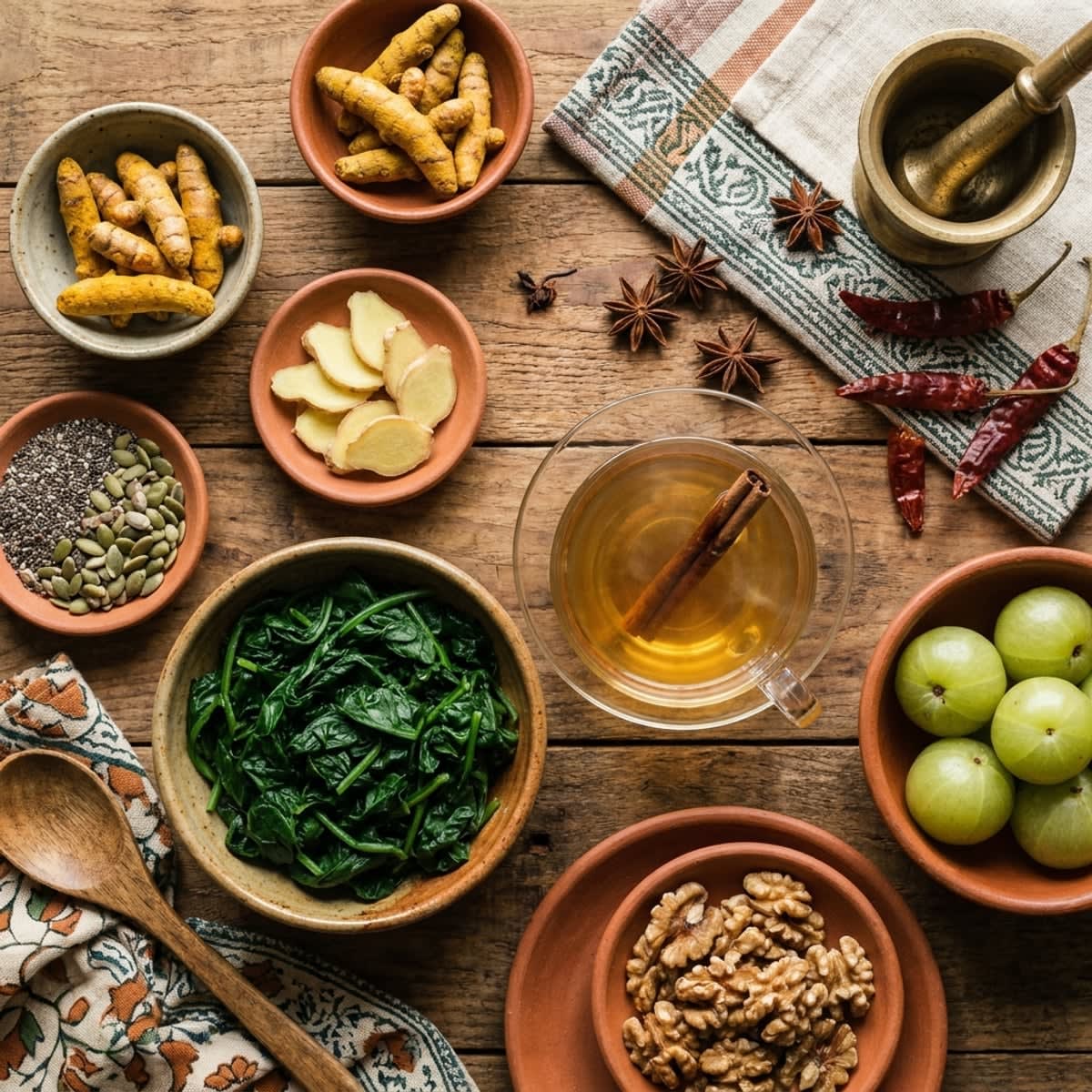
| Curcumin (Raw Turmeric) | Potent inhibition of COX-2 and downstream NF-κB pathways | Significantly reduces dysmenorrhea pain intensity and oxidative stress markers | Co-administer with piperine (black pepper) and healthy lipids to enhance bioavailability |
| Gingerols (Fresh Ginger) | Antagonizes thromboxane synthetase and leukotriene synthesis | Analgesic efficacy comparable to standard NSAIDs (ibuprofen/mefenamic acid) | Infuse fresh sliced rhizomes in hot water; consume twice daily during the luteal phase |
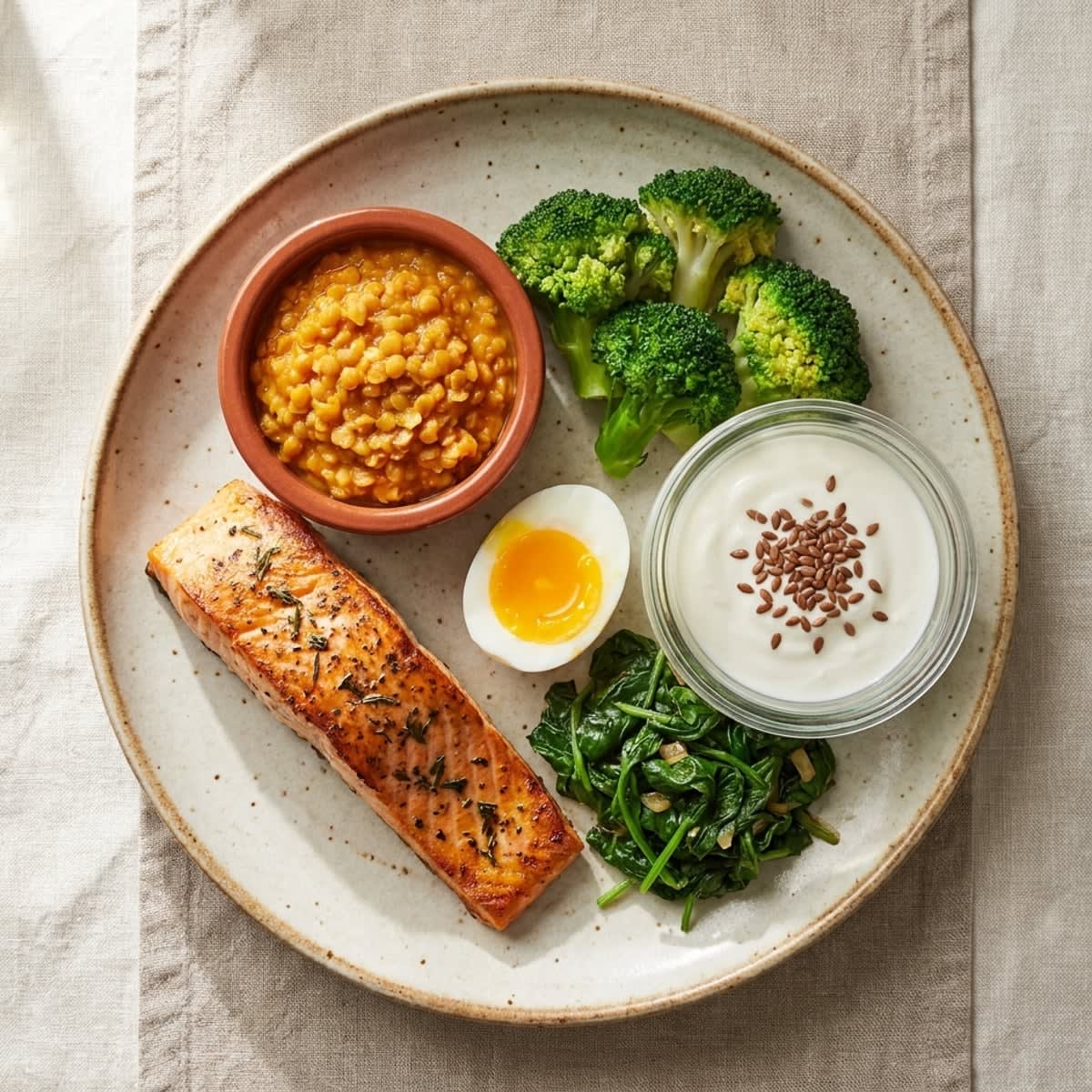
| Marine Omega-3 (EPA/DHA) | Competes with arachidonic acid, shifting the eicosanoid cascade toward anti-inflammatory series-3 prostaglandins | Reduces high-sensitivity C-reactive protein (hs-CRP) and improves insulin sensitivity | Prioritize small bone-in indigenous fishes (Mola, Dhela, Katchki) twice weekly |
| Sulforaphane & Indole-3-Carbinol | Upregulates hepatic Phase II glucuronidation of estrogens | Prevents estrogen dominance by optimizing the 2-OHE1 to 16$\alpha$-OHE1 metabolite ratio | Lightly steam cruciferous vegetables and native dark leafy greens |
3. Practical Clinical Recommendations
- Shift the Lipid Ratio: Replace high-omega-6 seed oils (corn, refined soybean, unrefined palm oil) with cold-pressed mustard oil, extra virgin olive oil, and organic ghee in moderation.
- Stabilize Glycemic Swings: Pair carbohydrates with protein and soluble dietary fiber to eliminate postprandial glucose spikes that trigger transient inflammatory surges.
- Incorporate Bioflavonoids: Integrate polyphenol-rich native fruits such as Indian gooseberry (Amla), guava, and pomegranate into the weekly routine.
“⚠️ Medical Disclaimer: This guidance is educational and intended to support clinical lifestyle therapy. Women with biliary tract obstruction, active peptic ulcer disease, or those taking anticoagulant medications should consult their physician before significantly increasing culinary spices or herbal extracts.

Dr. Tasnim Ara
OB-GYN & Women's Health Specialist
Dedicated to creating evidence-based, compassionate health resources for women through every stage of life.
Medically reviewed. This story was checked against current clinical guidance by the Femevia medical board. It is educational — always speak with your own clinician about your care.


The conversation0
A kind, moderated space. Share what this story meant to you.
Sign in to join the conversation